
Securing the Hybrid Workplace
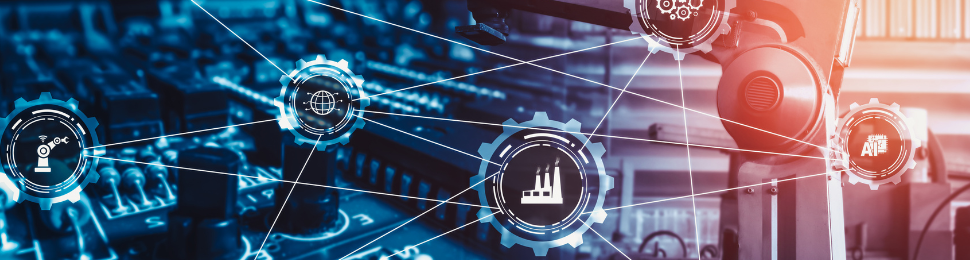
The rise of AI is reshaping manufacturing – from smart assembly lines and predictive maintenance to real-time quality control. These AI-driven processes generate massive, unpredictable data flows that strain traditional networks. Manufacturers need connectivity that can keep pace: high-bandwidth links, ultra-low latency, and flexible, distributed architecture. Fortunately, modern SD‑WAN (software-defined WAN) is evolving to meet these needs.
Cybersecurity Framework for Smart Factories: 7 Essential Steps Every IT Manager Must Take
As smart factories become the cornerstone of modern manufacturing, integrating Industrial IoT (IIoT), AI-driven automation, and cloud platforms, cybersecurity has emerged as a non-negotiable priority. The convergence of operational technology (OT) and information technology (IT) creates unprecedented vulnerabilities, with cyberattacks on manufacturing now outpacing those on financial sectors.
Enhancing Network Connectivity to China for Manufacturing

The manufacturing industry relies heavily on seamless and reliable global communication, especially when it comes to coordinating operations, supply chains, and production lines spread across different regions. For manufacturers with operations in China, establishing high-performance network connectivity is crucial for ensuring that everything runs smoothly. However, connecting branch offices and factories in China with headquarters or supply chain partners in Europe, the United States, or other regions presents several unique challenges.
How to Secure Multi-Cloud through SD-WAN

SD-WAN is a relatively new technology that is being adopted by many organizations in order to improve their WAN performance. SD-WAN offers a number of advantages over traditional WAN solutions, including improved performance, lower costs and easier deployment. One of the main benefits of SD-WAN is its ability to improve video performance. Video is one of the most demanding applications when it comes to network bandwidth.
Cloud Security with SD–WAN

With an increase in cyber-crimes across the globe, cyber threats are becoming disastrous for vulnerable victim organisations. Whether these are phishers, scammers, viruses or even bots, they can be very dangerous to corporate data. During the days of the pandemic, corporate data had become more vulnerable to cyber attacks with orders to work from home. Hackers across the world are exploiting remote working networks during these unfavorable times, taking advantage of very minor human errors and weak network security layers.
Remote Work Solutions

Since the outbreak of COVID-19, we are living in the middle of a chaotic situation. As the situation is highly ambitious and even unknown, that is the reason many organizations and businesses are moving towards remote working solutions for continuing operation of their companies. Those who have adopted the remote working solution, are able to continue their business operations as usual. Although not in the same way as before the pandemic, but successful enough to maintain the continuity of their business processes. Due to continuous adoption of remote working solution among the companies, competition is again picking the pace and organizations are trying best to adopt best remote working practices to lead their market share. That is why, it is highly necessary for businesses of all sizes to learn and adopt remote working solutions to pursue their business activities in a productive way.
SD-WAN vs IPsec VPN’s

An encrypted connection between two or more computers is called a virtual private network, commonly known as a VPN. These VPN connections are subjected to public networks, but exchange of data is private because of encryption. It becomes possible to share and securely access confidential data over public networks using VPNs. For example, corporate employees often use VPNs when they work from home or work remotely to access and share corporate files and applications securely.