
Branch networks are under more pressure than ever. Cloud applications, hybrid work, connected retail, and an explosion of IoT endpoints have turned the traditional “router plus firewall plus Wi‑Fi” stack into a brittle, hard‑to‑manage patchwork.
SD‑Branch has emerged to simplify this reality by bringing SD‑WAN, LAN, Wi‑Fi and security together under a single, software‑defined management plane. Cisco Meraki, HPE Aruba and Arista VeloCloud are three of the most visible names in this space, each promising to streamline branch connectivity and operations.
However, when SD‑Branch is delivered as a co‑managed service, combining a unified platform with specialist support, the experience for IT leaders is fundamentally different. This is where Arista VeloCloud SD‑Branch, deployed and operated by Digital Carbon, stands out as the rising star for organisations that want simplicity, resilience and strong security without surrendering visibility or control.
What SD‑Branch actually solves
At a high level, SD‑Branch does three crucial things for IT teams:
Unifies SD‑WAN, switching, Wi‑Fi and security policies across all sites under one logical platform.
Replaces manual, device‑by‑device configuration with zero‑touch provisioning and central templates.
Embeds security and analytics into the fabric, rather than bolting on point solutions per site.
Traditional designs often involve separate routers, firewalls, Wi‑Fi controllers and switching platforms, each with their own management tools and policy models. This leads to operational silos, inconsistent security and very slow change management across tens or hundreds of branches.
SD‑Branch platforms aim to fix this by providing a single policy and telemetry surface from WAN edge to wired and wireless access, enabling IT teams to standardise roll‑outs and troubleshoot issues in minutes rather than hours or days.
Cisco Meraki: cloud‑managed simplicity with SD‑Branch ambitions
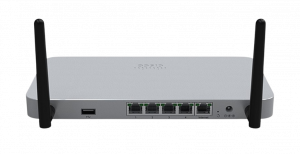
Cisco Meraki is best known for making cloud‑managed networking accessible and easy to consume, and the same philosophy underpins its SD‑Branch story. Meraki appliances, switches and access points are managed from a single cloud dashboard that allows central configuration, monitoring and troubleshooting.
Meraki SD‑WAN capabilities include central policy definition, dynamic path selection based on link performance, and application‑aware traffic steering, helping organisations prioritise critical voice, video and SaaS traffic while relying on ordinary broadband circuits. Security services such as next‑generation firewalling, IDS/IPS and malware protection are integrated, leveraging Cisco Talos threat intelligence to block a high proportion of known threats automatically.
For many mid‑market customers, Meraki’s user‑friendly interface and “single pane of glass” view have significantly reduced the need for on‑site IT visits at branch locations, particularly in retail and healthcare environments. However, Meraki’s SD‑WAN feature set is intentionally opinionated and simplified: community feedback points to relatively limited application libraries for traffic shaping, constrained VPN throughput and a focus on ease of administration over deep network customisation or advanced WAN optimisation.
If your primary requirement is basic SD‑WAN connectivity and straightforward cloud‑managed operations, Meraki is a credible choice. But if you are looking for fine‑grained WAN optimisation, large‑scale segmentation and architectural flexibility across complex estates, you will often need to look beyond Meraki’s simplified approach.
HPE Aruba: integrated SD‑Branch with controller‑centric heritage
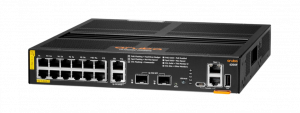
HPE Aruba has been vocal about SD‑Branch for several years, positioning its solution as an integrated framework that combines SD‑WAN, WLAN, LAN and security under Aruba Central cloud management. Aruba Branch Gateways and 9000‑series routers provide SD‑WAN and firewalling at the edge, while Aruba Central offers a single point for policy enforcement and visibility across wired and wireless access.
From an architectural standpoint, Aruba’s SD‑Branch vision is attractive: context‑aware policy, unified management and integration with security services to safeguard users and IoT. However, its implementation remains heavily influenced by a controller‑centric Wi‑Fi heritage, relying on centralised control and tunnelling that can introduce choke points, single points of failure and upgrade‑related downtime.
Arista’s competitive analysis of HPE Aruba highlights several practical limitations:
Aruba Central virtual AP architecture typically scales to around 128 access points per site before additional controllers or appliances are required.
Cloud management upgrades can lead to maintenance windows that impact management access, with documented cases of prolonged upgrade periods.
Large deployments often need extra gateway or controller appliances, adding complexity and cost.
In addition, HPE Aruba’s campus and branch product portfolio has grown via multiple acquisitions, resulting in overlapping operating systems and management tools that can increase training requirements and operational overheads for IT teams.
For organisations standardised on Aruba today, SD‑Branch can be a natural extension. But the underlying architecture and product complexity make it harder to achieve the kind of “hands‑off operations model” many IT leaders now expect from a modern SD‑Branch platform.
Arista VeloCloud SD‑Branch: unified, cloud‑delivered and operations‑first
Arista’s acquisition of the VeloCloud SD‑WAN portfolio from Broadcom in 2025 was a pivotal moment for the SD‑WAN and SASE market, bringing together a proven, cloud‑native SD‑WAN stack with Arista’s strengths in campus switching and Wi‑Fi.
Arista VeloCloud SD‑Branch combines four core building blocks into a single, cloud‑delivered architecture:
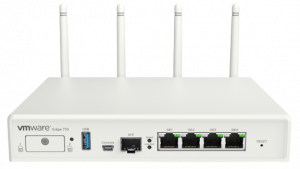
VeloCloud SD‑WAN Edge for secure, application‑aware WAN connectivity over broadband, DIA, LTE, 5G and even satellite.
Arista cloud‑managed PoE switches that extend SD‑Branch into wired access with Zero Touch Provisioning, rich PoE features and segmentation using VLAN/VXLAN.
Arista Wi‑Fi 6/6E/7 access points using a distributed “cognitive” control plane, with integrated WIPS, advanced RF management and client‑journey troubleshooting.
Embedded security services including Enhanced Firewall Service, Edge Threat Management and Network Access Control (NAC), providing consistent zero‑trust controls from WAN to edge.
All of this is orchestrated centrally through VeloCloud Orchestrator, creating a single logical SD‑Branch platform for all branch types, from retail stores and hotels to manufacturing sites and logistics hubs.
DMPO and application‑driven performance
A key differentiator is VeloCloud’s patented Dynamic Multipath Optimisation (DMPO). Edges continuously measure loss, latency and jitter across all WAN links and steer traffic per‑packet over the best path for each application, while applying on‑demand remediation to maintain quality on imperfect circuits. This enables enterprises to mix lower‑cost internet circuits with private links and still deliver a consistent user experience for voice, video, collaboration and transactional applications.
In contrast, competing SD‑WAN solutions from Cisco and HPE often offer more basic flow‑based path selection and less sophisticated remediation, particularly when running on platforms that treat SD‑WAN as an add‑on to firewall hardware or controller infrastructure.
Distributed campus architecture, not controller bottlenecks
On the LAN and Wi‑Fi side, Arista’s Cognitive Campus approach uses distributed control and standards‑based VXLAN to avoid the central controller bottlenecks seen in some Aruba designs. Access points and switches maintain local forwarding and resilience, while CloudVision provides a unified view and automation engine for wired and wireless.
Features such as hitless AP upgrades (with clients transparently re‑associated to neighbouring APs), built‑in WIPS radios and full‑stack client‑journey analytics allow operations teams to resolve Wi‑Fi issues rapidly without deploying extra sensors or management tools. In many head‑to‑head comparisons, Arista’s Wi‑Fi solution has demonstrated a lower total cost of ownership by bundling enterprise‑class features into the AP rather than charging feature‑by‑feature licence premiums.
Security woven into the fabric
VeloCloud Enhanced Firewall Service provides stateful L3–L7 inspection, IDS/IPS, URL and malicious IP filtering, DDoS protection and segmentation directly on the Edge, eliminating the need for a separate firewall at each branch. NAC at the wired and wireless edge uses 802.1X, MAC‑based authentication and dynamic VLAN/VXLAN assignment to enforce identity‑based access and limit lateral movement.
Security events and logs are centralised in VeloCloud Orchestrator, with regional log hosting included as part of the SD‑WAN service and optional SIEM integration for advanced analytics. This makes it significantly easier for IT and security teams to gain a single view of threats and policy violations across all branches.
Digital Carbon: SD‑Branch as a co‑managed service
Even with a best‑in‑class platform, many IT teams do not have the time or in‑house expertise to design, deploy and continuously tune a modern SD‑Branch architecture across dozens or hundreds of locations. This is exactly the gap Digital Carbon fills.
Digital Carbon delivers Arista VeloCloud SD‑Branch as a co‑managed service. In practice, this means:
Design and architecture – Digital Carbon works with your stakeholders to define a standard, repeatable SD‑Branch blueprint for all sites, including WAN topology, segmentation, Wi‑Fi design and security policies.
Zero‑touch deployment – Branch Edges, switches and access points are shipped pre‑staged; non‑technical staff simply power them on, while Digital Carbon activates and configures them centrally.
Day‑to‑day operations – Digital Carbon manages templates, monitors performance and security, provides proactive tuning and handles incident response, while your IT team focuses on business‑critical initiatives.
Shared visibility and control – You retain access to VeloCloud Orchestrator, and can see exactly what is happening at every branch and can make day‑to‑day changes where appropriate.
This model gives IT leaders the “best of both worlds”: strategic control over standards and policy, with the operational heavy lifting — and 24×7 optimisation — handled by a specialist Arista Elite Partner.
Digital Carbon has already applied this model in sectors such as retail, manufacturing and construction, where rapid branch roll‑outs, cost‑effective connectivity and strong edge security are essential. For example, in modern retail environments, Digital Carbon uses Arista VeloCloud Edges with multiple WAN links, segmenting POS, staff and guest Wi‑Fi while ensuring high‑quality access to SaaS and inventory systems over internet circuits.
How the market leaders compare
For IT managers and network engineers evaluating their next‑generation branch strategy, the differences between the main SD‑Branch players can be summarised along a few key dimensions:
For organisations that simply need to “get out of the box” with basic SD‑WAN and a familiar vendor badge, Cisco Meraki and HPE Aruba can fit the bill. But for IT leaders looking for a platform engineered for long‑term agility — with deep WAN optimisation, a modern campus architecture and integrated security — Arista VeloCloud SD‑Branch, deployed by Digital Carbon, offers a compelling and future‑proof path.
Choosing your next SD‑Branch partner
When you evaluate SD‑Branch options, the question is no longer just “which vendor has the longest feature list?”, but “which platform and partner will actually simplify branch networking for my team over the next five to ten years?”.
Cisco Meraki and HPE Aruba both bring strong brand recognition and capable products, but their SD‑Branch offerings remain shaped by earlier architectural choices — simplified SD‑WAN in Meraki’s case, and controller‑centric Wi‑Fi plus multi‑OS complexity in Aruba’s.
Arista VeloCloud, especially when delivered as a co‑managed service by Digital Carbon, takes a different approach: treat SD‑Branch as one unified, cloud‑delivered fabric, design for zero‑touch and automation from day one, and back it with a specialist partner that shares operational responsibility while leaving you firmly in control.
For IT managers, IT directors, network engineers and support teams who are ready to modernise their branch estate, that combination of architecture and partnership is exactly what turns SD‑Branch from a technology choice into a strategic advantage.