

Modern retail demands a reliable, high-performance network to support point-of-sale, inventory systems, Wi‑Fi and smart devices. Traditional store networks – often cobbled together with MPLS links, local routers and spot solutions – struggle with downtime, limited capacity and heavy management overhead. SD-Branch changes that by integrating SD-WAN, switching, Wi‑Fi and security into one cloud-managed platform. Using Arista VeloCloud SD-Branch, retailers can deploy new stores rapidly (with zero-touch provisioning), use multiple links (broadband, 4G/5G) for continuous uptime, power PoE devices (POS terminals, cameras, sensors) from compact switches, and apply consistent security and policies across all sites. The outcome is faster rollouts, fewer outages (and lost sales), better customer experience and easier centralised operations.
The Retail Network Challenge
Retail sites today are far more than a simple POS terminal with a dial-up modem. A typical store might run cashless payment systems, inventory management, digital signage, security cameras, mobile point-of-sale and even interactive customer kiosks – all on the same network. Add guest Wi-Fi and an increasing number of IoT sensors (for door control, shelf monitoring, beacons, etc.) and it’s clear that connectivity has become central to the customer experience and store operations.
When that network goes down, everything stops. Checkout lines halt, electronic price tags freeze, and customers (and store staff) get frustrated. Even brief outages can cost thousands in lost sales and damage a brand’s reputation. For example, on a peak sales day like Black Friday, a single failed link or router could mean tens of thousands of pounds in missed transactions before even minutes pass. In this environment, continuous uptime and performance are non-negotiable business requirements for retailers.
Yet traditional branch networking struggles to meet these needs. Many stores still rely on older WAN models: an MPLS or single broadband circuit back to head office, a local router, a standalone Wi-Fi access point and maybe a firewall. This siloed approach is slow to deploy (each new store is a separate project), hard to manage centrally, and brittle in the face of failures. Security can be inconsistent (if each store’s equipment is patched and configured separately, gaps will appear). And as demand grows, IT teams lack the visibility and tools to easily monitor performance and troubleshoot issues across hundreds of locations.
What Is SD-Branch for Retail?
SD‑Branch is the architectural response to these challenges. It extends the principles of SD-WAN (wide-area optimisation and management) into the entire branch network – unifying WAN, switching, Wi‑Fi and security under one cloud-managed solution. In practice, this means a retailer’s IT department can deploy identical site designs from store to store, manage policies centrally, and ensure every branch meets the same performance and security standards.
Concretely, an Arista VeloCloud SD-Branch solution for retail would include:
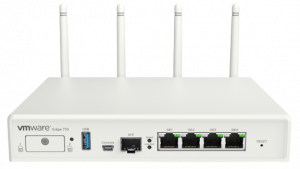
Arista VeloCloud SD-WAN Edge: A compact device (or virtual appliance) that acts as the store’s gateway. It supports multiple WAN links (fibre, broadband, 4G/5G, fixed wireless) concurrently. Traffic is secured in AES-encrypted tunnels and steered dynamically (via AI-powered multipath optimisation) so critical services (like payment processing) always get top priority. The SD-WAN edge has a built-in firewall and can even include onboard LTE/5G and Wi-Fi radios, reducing extra hardware. It automatically downloads its configuration from the VeloCloud Orchestrator (zero-touch deployment) and reports health metrics back to the cloud.
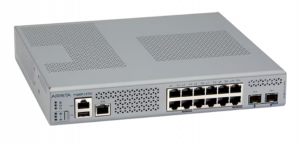
Arista LAN Switches (e.g. 710XP): Retail stores benefit from PoE (Power-over-Ethernet) switches that can power devices – such as IP cameras, Wi-Fi access points, NFC payment readers and shelf scanners – without separate power cables. The Arista 710XP is a compact, fanless, PoE switch ideal for small branch environments. It supports CloudVision CUE for zero-touch provisioning and provides rich telemetry. Features like “Continuous PoE” even keep devices powered during switch reboots. Using standardised PoE switches ensures every store has a consistent wired infrastructure.
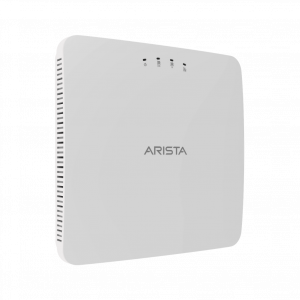
Arista Access Points: Modern Wi‑Fi (Wi-Fi 6/7) is essential in stores (for customer devices, mobile workers, handheld scanners, etc.). Arista’s indoor and outdoor APs (e.g. C-400 series) are managed via VeloCloud Orchestrator, a cloud-based controller focused on the edge. VeloCloud provides unified dashboards for both wired and wireless networks. It uses AI/ML analytics (baselining, anomaly detection) to highlight issues – for example, a report might flag that an AP is overloaded or that a client is repeatedly failing DHCP. The “Client Journey” feature drills down on end-user experience (tracking AAA/DHCP/DNS latencies), so IT can fix what actually impacts staff and customers. In short, Arista’s VeloCloud brings visibility and automation that retail IT teams normally don’t get in traditional store deployments.
Together, these components deliver an integrated edge: every store’s router, switch and APs are part of one platform. Policies (like VLANs, firewall rules or application priorities) are defined once in the cloud and pushed everywhere. Zero-trust security can be enforced consistently (e.g. guest and POS networks on separate segments with 802.1X authentication). Branch-to-branch and branch-to-cloud traffic is optimised automatically. And because Arista + VeloCloud operate as one fabric, the retailer gains a “leaf/spine” style network even at the store edge.
Key Benefits for Retailers
Faster Rollouts: New store setups can be dramatically accelerated. IT simply ships pre-configured Arista devices (switches, APs, SD-WAN appliances) to the site. The branch operator plugs them in; the hardware contacts the cloud and downloads its settings (zero-touch). There’s no need for an engineer on location to configure routers or firewalls. This agility means a rollout programme of dozens of stores can proceed in parallel instead of one-by-one.
Uptime and Resilience: With multiple active links, a single link failure doesn’t crash the store. For example, the VeloCloud edge can be connected to the local broadband ISP and to a 4G/5G simultaneously. If the primary link degrades, traffic fails over instantly to the backup (and back again when restored). VeloCloud’s dynamic path selection constantly monitors link quality. On top of that, critical traffic (voice calls or payment authorisations) can be prioritised so they never queue behind less important downloads. In practice, this means stores stay operational even during ISP issues. As one industry blog notes, “Even short interruptions can cascade into lost revenue”. SD-Branch is designed to minimise those interruptions.
Improved Customer Experience: Retailers compete on service. Slow Wi‑Fi, frozen payment terminals or blank price displays hurt the shopping experience. SD-Branch helps deliver a “frictionless” experience. By optimising traffic, users see fast cloud checkout systems and responsive Wi-Fi. Integrated monitoring detects and often resolves performance issues before a customer even notices (for instance, ML-baselining can spot an underperforming AP or a flapping cable). The bottom line is more transactions completed smoothly, which directly protects revenue and brand reputation.
Cost Efficiency (ROI): SD-Branch can reduce networking costs. Commodity broadband and 4G links are generally cheaper than dedicated MPLS circuits. In a published case, one customer saw an up to 60% reduction in network transport cost after moving to an SD-WAN overlay. Moreover, by standardising on a single managed service, IT staff spend less time juggling multiple vendors and configurations. The central management and automation reduce the need for on-site IT interventions, saving labour costs. These savings help offset the investment in new edge hardware, and often result in a net-positive ROI within a couple of years.
Security and Compliance: Arista SD-Branch brings enterprise-grade security to each store by default. Every tunnel is encrypted, and the branch device includes a next-gen firewall (deep packet inspection, IDS/IPS). Guest Wi-Fi, POS networks and staff laptops can be put into separate segments with consistent ACLs and 802.1X authentication. Importantly for retail, PCI DSS compliance is easier: the solution can enforce that payment devices only talk to authorised endpoints, and provides central logs of all transactions. In other words, there are no “missing pieces” in the network – security is built-in from day one.
Centralised Operations (Co-Managed): Rather than IT being mired in tickets from each store, a co-managed model (such as Digital Carbon’s service) takes over the heavy lifting. A single pane (VeloCloud Orchestrator) shows the health of all stores. AI-driven alerts (from Arista’s analytics) warn of anomalies. Workflows like security patching or configuration changes are done centrally and rolled out to all locations at once. If a store has an issue, engineers can drill into exactly where it is (WAN vs LAN vs Wi-Fi) using integrated dashboards – reducing mean time to repair. This “follow the sun” monitoring and consistent operational model means small IT teams can effectively manage hundreds of sites.
Comparison: Traditional vs. SD-Branch
| Dimension | Traditional Store Network | SD-Branch (Arista VeloCloud) |
|---|---|---|
| Deployment Time | Slow, customised per store (weeks/months), on-site setup required. | Rapid, template-based deployments. Zero-touch provisioning from the cloud means new sites can be online in days or even hours. |
| Connectivity Options | Often MPLS or single broadband line, with limited failover. | Multiple transports (broadband, LTE/5G, fixed wireless) active simultaneously. Arista’s VeloCloud SD-WAN can aggregate links and steer traffic dynamically for best performance. |
| Management & Visibility | Disparate tools per device (router, firewall, Wi-Fi), limited visibility into end-to-end performance. | Unified cloud portal (VeloCloud Orchestrator) for all WAN, LAN and Wi-Fi. Central dashboard and AI analytics provide end-to-end insight. |
| Security & Compliance | Security often bolted on (separate firewalls, local ACLs). PCI compliance is manual. Guest and POS networks hard to segment. | Built-in enterprise firewall, micro-segmentation and Zero-Trust by default. Centralised policies (e.g. PCI scope) are applied site-wide and updated consistently. |
| Resilience & Uptime | Single link failures cause outages. No automatic failover or optimisation. | Active-active links with automatic failover. Dynamic path selection prioritises critical applications. Real-time analytics detect issues before they cause downtime. |
| Performance & CX | Variable – sensitive to link congestion and distance from HQ. Slow cloud apps. | Application-aware routing and QoS (e.g. for POS vs guest Wi-Fi). Local internet breakouts to clouds speed up SaaS use. Faster, more reliable service keeps customers happy. |
| Standardisation & Scale | Each site is custom; device configurations vary. Hard to scale operations. | A repeatable design/template for every store. Pre-configured hardware shipped from warehouse. Add new locations by following a common playbook. Consistency reduces errors. |
| Support & Troubleshooting | Manual, reactive: technicians must often be dispatched or log into each box. Little proactive insight. | Proactive monitoring by Digital Carbon. AI-driven analytics (CUE’s Client Journey, anomaly detection) speed root-cause analysis. Central teams solve issues remotely via one-pane dashboards. |
Next Steps for IT Leaders
- Assess Your Current Setup: Catalog existing networks in a few representative stores. What links are used? Which devices rely on the network (POS, cameras, kiosks)? Where are current pain points (outages, slow apps, security gaps)?
- Define Requirements: Identify must-have services (e.g. VoIP, cloud POS, video) and peak load scenarios (Holiday sales, promotions). Understand compliance needs (PCI, data protection).
- Plan Redundancy: Evaluate the availability of secondary links at store locations (e.g. can you add a 4G/5G backup to the Broadband line?). SD-Branch architectures assume at least two transports.
- Standardise Hardware: Decide on a repeatable kit list: e.g. VeloCloud edge appliance, Arista 710XP switch, Arista APs. Using the same model at each site simplifies design and stock.
- Pilot Deployment: Implement SD-Branch in one or two stores. Configure centrally and ship devices. Validate that failover works, applications perform well, and that monitoring is effective.
- Scale Out: Incorporate learnings from the pilot. Create a deployment template (network plan, VLAN mapping, QoS rules). Then roll out the remaining stores in waves, using the streamlined process.
By following a structured path and leveraging a managed SD-Branch service, retail IT teams can transform “stores” into truly smart stores – fast to deploy, easy to manage, highly reliable and secure. This foundation not only protects revenue and enhances the customer experience today, but also enables future innovations (AI-driven customer analytics in-store, IoT expansion, cashier-less checkouts) on a robust network.