
How Manufacturing IT Teams Can Do More With Less

The rise of AI is reshaping manufacturing – from smart assembly lines and predictive maintenance to real-time quality control. These AI-driven processes generate massive, unpredictable data flows that strain traditional networks. Manufacturers need connectivity that can keep pace: high-bandwidth links, ultra-low latency, and flexible, distributed architecture. Fortunately, modern SD‑WAN (software-defined WAN) is evolving to meet these needs.
Securing the Hybrid Workplace

The rise of AI is reshaping manufacturing – from smart assembly lines and predictive maintenance to real-time quality control. These AI-driven processes generate massive, unpredictable data flows that strain traditional networks. Manufacturers need connectivity that can keep pace: high-bandwidth links, ultra-low latency, and flexible, distributed architecture. Fortunately, modern SD‑WAN (software-defined WAN) is evolving to meet these needs.
Revolutionising Construction Connectivity

The rise of AI is reshaping manufacturing – from smart assembly lines and predictive maintenance to real-time quality control. These AI-driven processes generate massive, unpredictable data flows that strain traditional networks. Manufacturers need connectivity that can keep pace: high-bandwidth links, ultra-low latency, and flexible, distributed architecture. Fortunately, modern SD‑WAN (software-defined WAN) is evolving to meet these needs.
SD-WAN vs SASE for a Hybrid Workforce

The rise of AI is reshaping manufacturing – from smart assembly lines and predictive maintenance to real-time quality control. These AI-driven processes generate massive, unpredictable data flows that strain traditional networks. Manufacturers need connectivity that can keep pace: high-bandwidth links, ultra-low latency, and flexible, distributed architecture. Fortunately, modern SD‑WAN (software-defined WAN) is evolving to meet these needs.
Why IT Managers in Manufacturing Need Robust Infrastructure and Co-Managed SD-WAN

In the rapidly evolving world of manufacturing, the factory floor is no longer a collection of isolated machines and manual processes. Today’s factories are dynamic, highly connected environments where data flows as freely as raw materials. This transformation is being driven by the convergence of operational technology (OT) and information technology (IT), the rise of Industry 4.0, and the need to remain competitive in a global market. For IT managers, the challenge is clear: how do you build a digital backbone that is not only robust and secure but also agile enough to support innovation and growth?
Manufacturing Under Siege: 5 Critical Network Priorities That Could Save Your Business in 2025

The manufacturing industry is facing an unprecedented cybersecurity crisis, and the statistics are genuinely alarming. A comprehensive survey reveals that 84% of manufacturing leaders fear malware and ransomware attacks above all other threats, whilst 68% of IT teams are dangerously understaffed to handle growing network complexities. With manufacturing accounting for 25.7% of all cyberattacks globally, IT managers can no longer afford to treat network security as an afterthought.
Transforming Manufacturing Connectivity: How SD-WAN and WAN Optimization Work Together
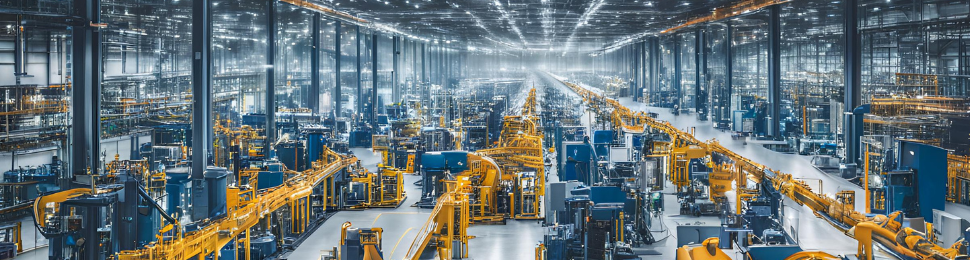
In today’s fast-evolving manufacturing landscape, connectivity is a crucial driver of productivity, efficiency, and innovation. The integration of advanced manufacturing systems, IoT devices, and real-time analytics platforms has placed unprecedented demands on enterprise networks. Manufacturers are no longer just factories—they’re highly interconnected ecosystems where speed, reliability, and seamless access to cloud and on-premises applications are non-negotiable.
Enhancing Network Connectivity to China for Manufacturing

The manufacturing industry relies heavily on seamless and reliable global communication, especially when it comes to coordinating operations, supply chains, and production lines spread across different regions. For manufacturers with operations in China, establishing high-performance network connectivity is crucial for ensuring that everything runs smoothly. However, connecting branch offices and factories in China with headquarters or supply chain partners in Europe, the United States, or other regions presents several unique challenges.
Is MPLS Needed for SD-WAN?

SD-WAN is rapidly capturing the market of MPLS, which was dominating for decades. But both technologies have their limitations as well as their advantages. Though infant SD-WAN seems reliant on MPLS in some major fields, this reliance is not unavoidable. SD-WAN can still altogether bypass MPLS. But it should not be recommended. A perfect hybrid of SD-WAN and MPLS can benefit business organizations in terms of cost-saving, increased security, reduced packet loss, reduced latency, and performance enhancement.
SD-WAN or MPLS

The proliferation and maturation of network technology enthused multiple opinions among the vendors about the benefit and worth of SD-WAN and MPLS in the present era. Since most opinions revolve around the inception of the latest technology overpowering the preceding ones, it is anticipated that SD-WAN would take over the MPLS in the near future.