
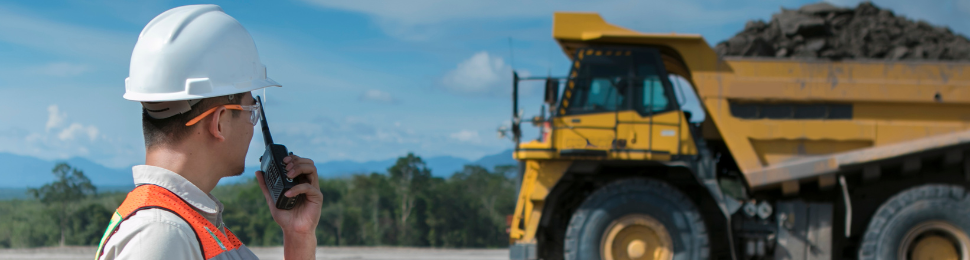
Starlink is redefining what’s possible for remote mining operations – but on its own, it is not enough. When you combine Starlink’s high‑performance fixed wireless access with Arista VeloCloud SD‑WAN, delivered and supported by Digital Carbon, you turn connectivity into a resilient, intelligent platform for automation, safety, and growth.
The connectivity challenge in modern mining
Mining has always taken place where networks do not. From deserts and high plateaus to deep forest and offshore operations, the most valuable deposits are often in the hardest‑to‑reach locations. Historically, connectivity has been slow, fragile, and extremely expensive, limiting how far digital transformation could really go at the edge.
As fleets, plants, and people become more connected – through IoT sensors, CCTV, autonomous equipment, and cloud‑based applications – the quality of the wide area network becomes a direct constraint on productivity and safety. If links are congested or unreliable, remote operations centres lose real‑time visibility, collaboration suffers, and safety systems can be compromised precisely when they are needed most.
Starlink Performance Kit: a new foundation at the edge
The Starlink Performance Kit changes the starting point for connectivity at remote mine sites. It can deliver download speeds exceeding 400 Mbps and latency as low as 20 ms, transforming what is possible for real‑time telemetry, video, and cloud access far from fibre. The kit includes a rugged flat‑panel antenna in an aluminium housing, an advanced power supply, a Gen 3 router, and industrial‑grade cabling with flexible mounting options, all engineered for demanding open‑pit and underground environments.
This hardware is built to withstand temperatures from −40 °C to +60 °C, high winds, dust storms, vibration, and heavy rainfall, and carries IP68 and IP69K ratings for protection against dust and water ingress – critical in harsh mining conditions. Once installed with a clear view of the sky, the terminal automatically connects to the Starlink low Earth orbit constellation, without the need for towers, microwave backhaul, or lengthy fibre builds, bringing new or temporary sites online in days rather than months.
Why Starlink still needs SD‑WAN
For many mines, Starlink feels like a revolution – but it is still “just” a transport. Like any fixed wireless access (FWA) or satellite service, it is vulnerable to variations in speed, jitter, packet loss, and latency caused by distance to gateways, atmospheric conditions, and local obstructions. In addition, bandwidth is not infinite: exceeding usage thresholds can be costly, and contention across multiple applications can quickly degrade critical services if traffic is not intelligently managed.
Enterprise mining workloads such as voice, video collaboration, SaaS, and IaaS are highly sensitive to these network characteristics. Without an intelligent overlay, IT teams are forced to treat Starlink as a “best effort” link, which undermines the ambition to run centralised operations centres, automate fleets, and push more analytics into the cloud. SD‑WAN is the missing layer that transforms Starlink from consumer‑grade connectivity into an enterprise‑grade platform for the connected mine.
Arista VeloCloud: turning FWA into an enterprise‑grade WAN
Arista VeloCloud SD‑WAN is specifically designed to take consumer‑grade circuits – including 5G FWA and low Earth orbit satellite – and make them behave like high‑quality enterprise links. It has already transformed more than one million such circuits into business‑ready connectivity for tens of thousands of customers worldwide. For mining organisations, running Starlink over Arista VeloCloud means every remote pit, camp, or plant can benefit from intelligent optimisation, security, and control.
A key capability is Dynamic Multipath Optimisation (DMPO), which continuously monitors packet loss, latency, and jitter across links and applies remediation techniques to improve performance. In tests on 5G FWA, DMPO increased usable link capacity by up to 90%, while on LEO satellite links it boosted usable bandwidth by up to 650% for real‑time voice and video – the kind of applications that underpin remote control rooms, tele‑operations, and high‑definition surveillance.
Beyond path optimisation, Arista VeloCloud SD‑WAN classifies and prioritises more than 4,000 applications by default, allowing IT teams to ensure business‑critical traffic – such as fleet management, safety platforms, ERP, and OT telemetry – always comes first. Non‑essential categories like gaming or recreational streaming can be deprioritised or blocked, preserving precious bandwidth on Starlink links without relying on blunt, site‑wide restrictions.
Direct internet access and hybrid underlay for mines
Modern sd wan solutions are built around the concept of secure direct internet access from each site, rather than hair‑pinning traffic back through a central data centre. With Arista VeloCloud, each mine site can use Starlink as a high‑performance DIA path to cloud platforms and SaaS applications, while also combining it with other underlay links such as local broadband, 4G/5G, or dedicated circuits where available.
This hybrid approach is particularly powerful for mining. Critical OT and safety traffic might be steered over the best‑performing path at any moment, whilst less sensitive workloads use remaining capacity across all links, with policies automatically enforced by the SD‑WAN overlay. As one of the specialist sd wan providers focused on multi‑site, high‑growth businesses, Digital Carbon designs architectures where Starlink, terrestrial broadband, and other services work together rather than in silos.
Because VeloCloud Edges support features such as dual physical SIMs, eSIMs, and zero‑touch provisioning, remote deployments can be commissioned rapidly with minimal on‑site IT presence – a major advantage where mine sites may be hundreds of kilometres from the nearest town. Telemetry from the FWA layer, including congestion, packet drops, signal strength, and degradation, feeds back into the SD‑WAN analytics to simplify troubleshooting and capacity planning across the entire mining estate.
Digital Carbon’s co‑managed and professional services model
Technology alone will not deliver a connected mine. It must be designed, deployed, and operated in a way that aligns with your organisation’s skills, governance, and growth plans. Digital Carbon specialises in SD‑WAN, SASE, and secure connectivity for multi‑site businesses, acting as both integrator and long‑term partner.
Under Digital Carbon’s co‑managed model, your internal IT team retains full visibility, policy control, and access to the SD‑WAN and security platforms, rather than being locked out behind a managed service wrapper. Digital Carbon works as an extension of your team, bringing deep Arista VeloCloud expertise to design the underlay and overlay, define application‑aware policies, and continuously optimise performance as your mining portfolio evolves.
Professional services cover the complete lifecycle: workshops to understand your current environment and goals; live demos of SD‑WAN and cloud security platforms; budgetary proposals tailored to specific sites and use cases; and proof‑of‑concept deployments over three to six months so you can see the value on real traffic before committing to a full roll‑out. Once in production, Digital Carbon provides global connectivity sourcing – including broadband, direct internet access, 4G/5G, and low‑orbit satellite – alongside 24/7 support, training, and value‑add services such as integrated voice and remote hands.
Use cases: Starlink and Arista VeloCloud in mining
When you join Starlink with Arista VeloCloud SD‑WAN, new patterns of operation become practical across all phases of the mining lifecycle.
Exploration and early‑stage sites
Temporary camps and drill pads can be brought online in days using the Starlink Performance Kit, with SD‑WAN Edge devices shipped pre‑configured and activated via zero‑touch provisioning. Geological survey data, drone imagery, and environmental monitoring feeds can be synchronised to cloud platforms in near real time, supporting faster evaluation and decision‑making.Autonomous and remote‑operated equipment
Low‑latency Starlink links, combined with DMPO and application prioritisation, give a much more stable foundation for remote operation of haul trucks, drill rigs, and underground vehicles from centralised control rooms. The SD‑WAN overlay continuously steers this traffic over the best available path and remediates loss and jitter, improving operator experience and reducing the risk of interruptions.Safety, environmental, and compliance monitoring
CCTV, body‑worn devices, gas detectors, and geotechnical sensors all generate continuous streams of high‑value data. VeloCloud SD‑WAN ensures that alarms, video feeds from critical areas, and industrial control messages are always prioritised over less urgent traffic, while Starlink’s resilience ensures connectivity is maintained even when terrestrial infrastructure is compromised by weather or incident.Workforce welfare and retention
High‑speed satellite connectivity allows staff to make video calls, access streaming services, and stay in touch with family, improving morale on long remote rotations. Bandwidth management through SD‑WAN policies means this can be delivered without undermining operational traffic; recreational apps can be shaped or limited to off‑peak hours while still giving workers a significantly better on‑site experience than legacy satellite could offer.Multi‑site standardisation and scaling
Large mining organisations often operate pits, plants, and logistics hubs across multiple regions or countries. By standardising on Arista VeloCloud as the SD‑WAN platform and Starlink as a key FWA underlay, Digital Carbon helps create a repeatable connectivity blueprint: a common design that can be rolled out to each new site, with consistent security, visibility, and performance, regardless of local infrastructure constraints.
Choosing the right SD‑WAN partner for Starlink in mining
Not all sd wan vendors are equal when it comes to operating over fixed wireless access and satellite. Mining demands platforms that can handle highly variable underlay conditions, integrate with multiple connectivity types, and offer deep application awareness, without overwhelming local teams. Arista VeloCloud stands out for its proven ability to increase usable bandwidth on LEO satellite links dramatically, its rich policy engine, and its strong track record across hundreds of thousands of globally distributed sites.
Equally important is the partner you choose to deliver and support the solution. Digital Carbon combines global reach with local expertise, working with trusted carriers and infrastructure partners worldwide to deliver broadband, DIA, 4G/5G, and low‑orbit satellite wherever your mines operate. As one of the sd wan providers that truly embraces co‑management, Digital Carbon ensures your team stays in control of policies and visibility while offloading the complexity of underlay procurement, design, and day‑to‑day optimisation to seasoned specialists.
By aligning Starlink’s Performance Kit with Arista VeloCloud and Digital Carbon’s co‑managed and professional services, mining organisations can move beyond “making the internet work” at remote sites. They can build a secure, scalable platform for connected operations – one where automation, analytics, safety, and workforce experience are no longer constrained by geography.
If you are exploring how Starlink and SD‑WAN could underpin your next phase of digital mining, Digital Carbon can help you assess current connectivity, run a focused proof of concept, and design a roadmap that puts your IT team firmly in the driver’s seat.