
3 Ways How SD–WAN Improves the Quality of Voice

Voice over Internet Protocol (VoIP) phone systems are common telephony technologies for multimedia sessions and voice communication over sophisticated networks of Internet Protocol (IP), for example over Internet. These VoIP phone systems are becoming a common sight of communication protocols in enterprises. In comparison to its conventional counterpart, PSTN, Voice over IP is capable to offer many advantages. For businesses, it offers a highly verstile breadth of servives and features, highly quality audio communication, easy-to-manage services, and reduced cost for distant calls.
Getting SASE with SD–WAN

Wide area networking (WAN) is a traditional networking solution based on multi-protocol label switching (MPLS). In such solutions, the reliability of the connection depends upon pre-defined communicating nodes. But these high-performance networking links between the two sites face limited bandwidths along with some other physical constrains. Hardware defined pre-setup in WAN is the major reason to shift towards a software defined – wide area networking (SD–WAN) solution.
Home as a Branch Site With SD–WAN

Organisations across the globe are rapidly adopting new technologies to meet customer demand during increasing market competition. It is necessary for their survival to keep pace with emerging trends in the market. Fluctuating customer demands, the introduction of new trends to the market and advancements in the technological sphere always cause big changes in the market.
6 Benefits How SD–WAN Will Improve Your Life

Organisations across the globe are rapidly adopting new technologies to meet customer demand during increasing market competition. It is necessary for their survival to keep pace with emerging trends in the market. Fluctuating customer demands, the introduction of new trends to the market and advancements in the technological sphere always cause big changes in the market.
Moving Your PBX to the Cloud
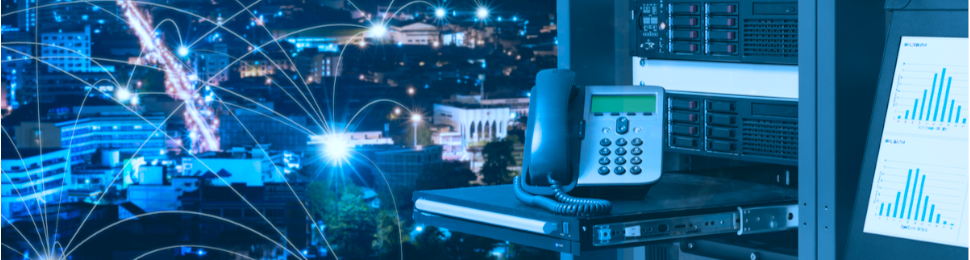
PBX is a business telephone system generally used to describe multiple call management features like outbound and inbound lines, voicemails, and call routings etc. It generally stands for Private Branch eXchange. PBX is based on a hardware system which is required to handle the call routings and call switching between a specified business location and adjacent telephonic network. It can be very easily understood by a simplified analogy of switchboard operator used for switching and routing. The name, Public Branch eXchange has originated from its functional operation, the way it interacts with PSTN networks. While the term ‘Private’ separates it out from PSTN that it is different from Public Switched Telephone Network (PSTN), regardless of the fact that it can also be connected to it.
Remote Work Solutions

Since the outbreak of COVID-19, we are living in the middle of a chaotic situation. As the situation is highly ambitious and even unknown, that is the reason many organizations and businesses are moving towards remote working solutions for continuing operation of their companies. Those who have adopted the remote working solution, are able to continue their business operations as usual. Although not in the same way as before the pandemic, but successful enough to maintain the continuity of their business processes. Due to continuous adoption of remote working solution among the companies, competition is again picking the pace and organizations are trying best to adopt best remote working practices to lead their market share. That is why, it is highly necessary for businesses of all sizes to learn and adopt remote working solutions to pursue their business activities in a productive way.
Versa vs Silver Peak SD-WAN
According to updated reports of the Dell’Oro Group, there are five top SD–WAN vendors who are running toe-to-toe for supremacy in the SD–WAN market share. The year 2019 was seen as a breakout year for the adoption of SD–WAN when it surpassed a $1 billion market share. According to already mentioned reports, Cisco, Versa Network, VMware, Silver Peak and Fortinet are holding high ranking positions, as these top SD–WAN market leaders accounted for a 60% accumulated share in the generated revenue in 2019. But none of them surpassed a 20% share of the market, which shows a high potential for competition among the market giants for dominance. That is why these are still early days for penetration into the market.
SD-WAN vs IPsec VPN’s

An encrypted connection between two or more computers is called a virtual private network, commonly known as a VPN. These VPN connections are subjected to public networks, but exchange of data is private because of encryption. It becomes possible to share and securely access confidential data over public networks using VPNs. For example, corporate employees often use VPNs when they work from home or work remotely to access and share corporate files and applications securely.
SD–WAN Accelerating Network Performance

According to 2016’s State of the WAN report, traditional WAN exhibits performance limitations such as latency issues and packet loss at a higher level. In this report, two of the factors among the top five were related to network performance, which is of crucial importance. This is the major reason behind fundamental shift from WAN to SD–WAN. As we move toward SD-WAN solutions, it is necessary to understand how various aspects of SD-WAN can provide discrete solutions to improve performance of the network.
What is SASE?
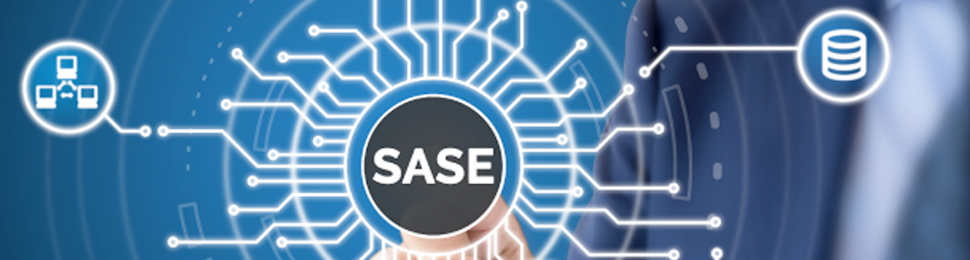
Secure Access Service Edge (SASE) is a combinational network architecture of SD–WAN and Remote Access VPN that combines the capabilities of both and delivers them as a service. It combines functionalities and capabilities of SD–WAN and VPN with cloud native security functions, for example, firewalls, secure web gateways, zero trust network access and cloud access security brokers. SASE vendors offer these cloud-delivered functions as a service.